
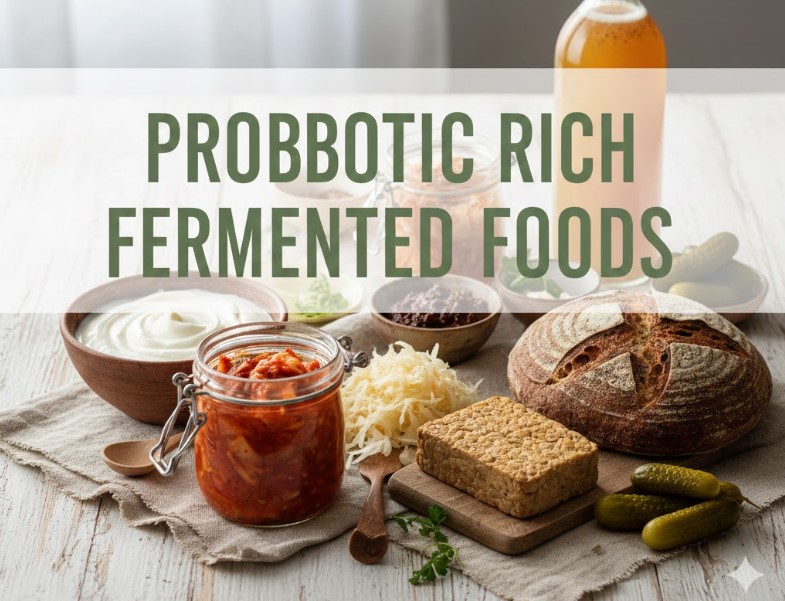
The incredible world of probiotic-rich fermented foods represents a culinary and wellness revolution, one that traces its roots back thousands of years and continues to shape modern understanding of health.
By deliberately harnessing the power of beneficial microorganisms, these extraordinary foods transform simple ingredients into powerhouses of nutrition and flavor, offering a tangible link between our ancient ancestors’ wisdom and cutting-edge nutritional science.
For anyone seeking to bolster their digestive health, enhance their immune system, and explore new dimensions of taste, diving into the diverse landscape of probiotic-rich fermented foods is a journey well worth taking.
Probiotic-rich fermented foods are far more than just a passing health trend; they are a fundamental pillar of human dietary history and a burgeoning field of scientific inquiry, promising profound benefits for the human body, particularly the intricate ecosystem known as the gut microbiome.
This vast community of bacteria, fungi, and other microbes residing primarily in our digestive tract plays a critical role in almost every aspect of our well-being, from nutrient absorption and immune function to mood regulation and even cognitive acuity.
When this delicate balance is disrupted, leading to a state of dysbiosis, the body can become susceptible to a range of issues.
The byproducts not only act as natural preservatives, extending the shelf life of the food, but also create an acidic environment that inhibits the growth of harmful, pathogenic bacteria, all while enhancing the food’s nutrient profile and digestibility.
Why Probiotic Rich Fermented Foods are Important
Probiotic rich fermented foods represent a true microbial revolution on your plate. Fermentation is a natural metabolic process carried out by microorganisms that convert carbohydrates, such as starches and sugars, into alcohols or acids.
This transformative process not only preserves food, extending its shelf life long before the invention of refrigeration, but also profoundly changes its flavor, texture, and, most importantly, its nutritional profile.
Here is an extensive breakdown of why these foods are absolutely essential for optimal health, with each point detailed in its own substantial section.
Nurturing and Diversifying the Gut Microbiome
The human gut is home to trillions of microorganisms, collectively known as the gut microbiome. This complex ecosystem is often referred to as a “second brain” or a forgotten organ, given its immense influence over nearly every systemic function in the body.
Probiotic rich fermented foods are important because they are the most natural and effective way to introduce new, viable strains of beneficial bacteria and yeasts into this internal garden.
When you consume these foods, you are directly increasing the diversity and population of friendly flora. A diverse microbiome is a resilient one, better equipped to handle dietary changes, stress, and environmental toxins.
A lack of diversity, often referred to as dysbiosis, has been linked to a wide array of chronic health issues. Regular consumption of a variety of these foods helps to continually “reseed” the gut, ensuring a robust, healthy, and varied microbial community is maintained, which is foundational to preventing dysbiosis and supporting long-term health.
Fortifying the Immune System’s Headquarters
A significant portion of the human body’s immune system, roughly 70 to 80%, is localized in the gut-associated lymphoid tissue, or GALT. The microbes that thrive from probiotic rich fermented foods are in constant communication with these immune cells.
They don’t just exist passively; they actively train and regulate the immune response. This makes these foods a vital immune support tool. The beneficial bacteria help the immune system distinguish between friend (harmless food particles) and foe (pathogens).
This regulatory function is crucial for preventing the immune system from becoming either underactive (leading to increased susceptibility to infections) or overactive (contributing to allergies and autoimmune conditions).
By strengthening the mucosal barrier, the probiotics prevent unwanted substances, known as antigens, from leaking into the bloodstream, a phenomenon often called “leaky gut.”
When the barrier is strong and the microbial community is balanced, the body’s immune defenses are optimally tuned, making regular consumption of these foods a proactive measure against both acute illnesses and chronic inflammatory diseases.
Enhancing Nutrient Bioavailability and Synthesis
One of the most profound, yet often overlooked, benefits of probiotic rich fermented foods is their ability to increase the nutritional value of the base ingredients. The microbial action during fermentation is a form of pre-digestion.
Microorganisms use their potent enzyme systems to break down complex molecules that humans often struggle to fully digest on their own. For instance, they can break down lactose in dairy, making it more digestible for lactose-intolerant individuals.
More importantly, they neutralize or break down anti-nutrients, such as phytic acid (found in grains and legumes). Phytic acid typically binds to minerals like iron, zinc, and calcium, preventing their absorption.
By fermenting grains for sourdough or legumes for tempeh, these anti-nutrients are degraded, dramatically increasing the bioavailability of essential minerals. Furthermore, certain probiotic strains are capable of synthesizing new vitamins, including various B vitamins (like B12, riboflavin, and folate) and Vitamin K2, which is crucial for bone and cardiovascular health.
Thus, by consuming probiotic rich fermented foods, you are not just getting the nutrients in the original food, but a significantly enhanced, pre-digested, and vitamin-enriched version.
Modulating the Crucial Gut-Brain Axis (GBA)
The connection between the gut and the brain is not metaphorical; it’s a hardwired, biochemical superhighway known as the Gut-Brain Axis (GBA). This axis involves the vagus nerve, endocrine signaling, and the production of neurotransmitters.
Probiotic rich fermented foods are essential because the microbes they contain are key players in this communication system. A large percentage of the body’s serotonin is produced in the gut and influenced by gut bacteria.
The microbes also produce a wide range of neuroactive compounds, including Short-Chain Fatty Acids (SCFAs) like butyrate, which is a primary fuel source for colon cells and is believed to have mood-stabilizing effects in the brain.
Consuming these foods is a form of “psychobiotic” intervention, supporting mental health by ensuring the smooth, beneficial communication between the gut and the brain. A healthy, well-fed microbiome is therefore a powerful tool for potentially reducing stress, anxiety, and improving overall cognitive and mental well-being.
Supplying Powerful Postbiotics and Bioactive Compounds
While the live organisms (probiotics) get most of the attention, their metabolic byproducts, known as postbiotics, are equally critical, and they are abundant in probiotic rich fermented foods.
Postbiotics are the non-viable functional components that result from the fermentation process, including organic acids (like lactic acid and acetic acid), microbial cell components, functional proteins, and various peptides.
The production of these compounds is what makes the food truly transformative. For example, the organic acids are what help lower the gut’s pH, which creates an inhospitable environment for harmful pathogens and encourages the growth of more beneficial bacteria already present.
Many of the postbiotic peptides are powerful antioxidants and have demonstrated significant anti-inflammatory properties, directly interacting with intestinal cells and immune receptors to calm systemic inflammation.
Therefore, even if some of the live cultures do not survive the journey through the digestive tract, the presence of these highly active postbiotics ensures that consuming probiotic rich fermented foods still yields immense physiological benefits.
The Ancient Roots of Fermentation
The practice of fermentation is virtually as old as civilization itself, a truly global phenomenon that arose independently across countless cultures. Long before Louis Pasteur’s landmark discoveries illuminated the role of microorganisms in the 19th century, people around the world were harnessing the power of the invisible.
The earliest evidence of fermentation dates back thousands of years. For example, the earliest forms of cheese and other cultured dairy products, likely stumbled upon by storing milk in animal-skin vessels that naturally contained fermenting bacteria, date back as far as 8000 BCE.
Similarly, fermented beverages like beer and wine were staples in ancient civilizations, valued for their preservation qualities, nutritional content, and sometimes, their use in religious and social ceremonies.
Across the continents, the ingenuity of ancient people led to a vast tapestry of fermented specialties:
- In Asia, the fermentation of vegetables, such as cabbage, into a spicy, pungent dish, and the creation of soy-based ferments like miso and soy sauce, became cornerstones of their respective cuisines. These practices were vital for enhancing nutrient availability and adding complex, umami flavors.
- In the Middle East and parts of Europe, the souring of milk into yogurt and kefir provided a digestible, long-lasting source of protein and fat.
- Across Europe, the fermentation of grains gave rise to leavened sourdough breads, which made nutrients more available and the finished product easier to digest. The preservation of vegetables through lacto-fermentation, leading to brined or soured preparations, was essential for surviving long, harsh winters.
This rich history demonstrates that probiotic rich fermented foods were not a luxury but a fundamental tool for survival, food safety, and nutritional security. The knowledge of how to create and maintain these ferments, was a precious cultural inheritance, passed down through generations.
What Makes Fermented Foods Probiotic-Rich?
The specific methods, ingredients, and the presence of live cultures are what elevate certain fermented foods into this highly beneficial category. Here is a break down of the mechanisms that confer the probiotic richness upon these remarkable foods.
The Intentional Use of Starter Cultures and SCOBYs
What fundamentally distinguishes a simple food decay process from a probiotic-rich fermentation is the intentional use of a starter culture.
These cultures are carefully managed populations of beneficial bacteria and yeasts, ensuring the fermentation process is directed towards producing health-promoting compounds and live microbes, rather than harmful ones.
For example, in the production of yogurt, specific strains of Lactobacillus bulgaricus and Streptococcus thermophilus are inoculated into milk. For the production of kefir and kombucha, complex symbiotic colonies of bacteria and yeast, known as SCOBYs (Symbiotic Culture of Bacteria and Yeast) or kefir “grains,” are employed.
These starter cultures are not random; they are selected precisely for their ability to thrive, consume the available sugars, produce desirable acids (like lactic acid), and, crucially, survive the process to be delivered alive to the consumer.
The presence of these specific, living, and often diverse, cultures in the final product is the primary factor that makes a food truly probiotic-rich and beneficial to the gut.
The Dominance of Lactic Acid Bacteria (LAB)
A hallmark of nearly all the most renowned probiotic-rich fermented foods is the prevalence of Lactic Acid Bacteria (LAB), primarily from the Lactobacillus and Bifidobacterium genera. These bacteria are critical for several reasons.
First, they are extremely efficient at converting carbohydrates (sugars) into lactic acid, which rapidly drops the pH of the food. This acidic environment, typically a pH of 4.6 or lower, is the mechanism by which the food is preserved, as it halts the growth of most pathogenic and spoilage microbes.
Second, the LAB strains themselves are the beneficial probiotics. They are naturally resistant to the low pH of the stomach, giving them a better chance of surviving and reaching the large intestine alive.
The sheer concentration and robust nature of these bacteria, which dominate the fermentation process, is what ensures that the final food product is densely populated with viable, gut-friendly organisms.
The Preservation of Live Cultures Through Unpasteurization
A crucial, non-negotiable step for a fermented food to remain probiotic-rich is the avoidance of pasteurization after the fermentation process is complete.
Pasteurization, which involves heating the food to a high temperature for a specified period, is a food safety measure designed to kill all pathogens and significantly extend shelf life.
However, this heat treatment is indiscriminate; it also destroys the beneficial, live probiotic bacteria and yeasts that were created during the fermentation. A product like canned sauerkraut or vinegar-brined pickles, while fermented in the past or simply flavored to mimic fermentation, is not probiotic-rich because it has been heat-treated.
Therefore, the foods that are the best sources of live probiotics must be labelled as “raw,” “unpasteurized,” or containing “live and active cultures” and are typically found in the refrigerated section of a store. This intentional final-stage handling is a defining factor in maintaining the probiotic vitality of the food.
Nutrient-Dense Substrates and the Synthesis of Bioactive Compounds
The final “richness” of a fermented food comes from the quality of its substrate (the original ingredient) and the metabolic creativity of the microbes. Probiotic-rich fermented foods typically start with nutrient-dense ingredients like milk, organic vegetables, or legumes.
As the bacteria and yeasts consume the sugars, they are not only multiplying (thus increasing the probiotic count) but are also generating a plethora of new, highly beneficial compounds collectively known as postbiotics.
These include Short-Chain Fatty Acids (SCFAs) like butyrate, various organic acids, and potent peptides with antioxidant and immune-modulating properties.
For example, during the fermentation of soy into tempeh, the mold Rhizopus oligosporus breaks down complex proteins into easily digestible amino acids and creates a unique source of dietary fiber.
This means the food is not only rich in live bacteria but also rich in the fuel (prebiotics) and byproducts (postbiotics) that sustain the bacteria and confer direct health benefits to the host. The complex interplay between the starting material and the microbial output is what ultimately defines its comprehensive probiotic and nutritional richness.
The Health Benefits of Probiotic Rich Fermented Foods
The consumption of probiotic rich fermented foods is one of the most powerful and accessible actions an individual can take for their health.
The benefits are multifaceted, extending far beyond the digestive tract to influence immunity, mental wellness, metabolism, and nutrient assimilation. Here is an extensive look at the science-backed health advantages these ancient foods offer.
Supporting and Restoring Digestive Homeostasis
The most direct and immediate benefit of consuming probiotic rich fermented foods is their profound impact on the digestive system. Probiotics actively contribute to microbial homeostasis, which is the state of balanced flora within the gut.
When the delicate balance of the gut microbiome is disrupted by stressors like antibiotics, poor diet, or illness (a condition known as dysbiosis), pathogens can proliferate. The regular introduction of diverse and robust probiotic strains, such as those found in kefir or sauerkraut, helps to re-colonize the gut with beneficial bacteria.
These good microbes engage in a process called competitive exclusion, effectively crowding out harmful bacteria and yeasts, thereby reducing the incidence of digestive complaints like bloating, gas, and abdominal discomfort.
Furthermore, the bacteria aid in the digestion of difficult-to-break-down components, like certain fibers and sugars (e.g., lactose in milk), leading to smoother, more efficient digestion and improved regularity
Boosting and Regulating Immune Function
A cornerstone of human health lies in the immune system, and an estimated 70-80% of immune cells are located in the gut lining. Probiotic rich fermented foods are essential for nurturing these cells and optimizing the body’s defenses.
The beneficial bacteria are in constant, complex communication with the immune system, acting as a kind of training partner. They help the immune system mature, respond appropriately to threats, and prevent it from overreacting to harmless substances (the mechanism often implicated in allergies and autoimmune conditions).
Key to this is the role of probiotics in strengthening the intestinal barrier. By producing substances that seal the junctions between gut cells, they reinforce this critical defense layer, preventing pathogens and toxins from “leaking” into the bloodstream.
By bolstering the barrier and modulating the immune response, the regular intake of probiotic rich fermented foods has been linked to a reduced risk and severity of common infections, particularly upper respiratory tract infections.
Enhancing Neuro-Chemical Balance via the Gut-Brain Axis
The intricate, bidirectional communication system between the gut and the brain is known as the Gut-Brain Axis (GBA), and it has revolutionized our understanding of mood and cognition. The microbes in probiotic rich fermented foods are vital producers of neuroactive compounds that influence the brain.
The gut microbiome is responsible for producing a large proportion of the body’s neurotransmitters, including serotonin, which is crucial for feelings of well-being, sleep regulation, and appetite control.
Specific probiotic strains found in certain fermented foods have been researched for their psychobiotic properties, showing potential to positively influence mood and reduce symptoms related to stress, anxiety, and even depression.
By promoting a balanced and healthy gut environment, these foods ensure the continuous and proper signaling along the GBA, offering a natural and dietary path to support mental and emotional health.
Reducing Chronic Systemic Inflammation
Chronic, low-grade systemic inflammation is a silent driver behind many modern diseases, including cardiovascular issues, metabolic disorders, and neurodegenerative conditions. Probiotic rich fermented foods offer a significant advantage in combating this widespread problem.
The beneficial microbes and their byproducts possess potent anti-inflammatory capabilities. The Short-Chain Fatty Acids (SCFAs) like butyrate, produced when microbes ferment dietary fiber, are key signaling molecules that directly interact with immune cells in the gut.
They dampen inflammatory pathways and reduce the production of pro-inflammatory cytokines, which are signaling molecules that circulate throughout the body and perpetuate inflammation.
By maintaining a strong gut barrier and producing these soothing metabolites, the regular consumption of diverse probiotic rich fermented foods helps to reduce the inflammatory burden on the body, offering preventative benefits against a wide range of chronic inflammatory diseases.
Metabolic Improving Metabolic and Cardiovascular Health
The influence of the gut microbiome, sustained by probiotic rich fermented foods, extends deeply into metabolic function. Research suggests that the diversity and composition of the gut flora can impact how the body processes fats and sugars.
Regular intake of these foods has been associated with modest, yet significant, benefits for cardiovascular health, including a positive influence on blood pressure and cholesterol profiles.
The mechanisms include the microbes’ ability to help break down and excrete bile salts, which in turn necessitates the use of cholesterol, potentially lowering blood cholesterol levels.
Furthermore, the anti-inflammatory and systemic effects of probiotics and postbiotics may improve insulin sensitivity and aid in the regulation of blood glucose, offering supportive dietary management for individuals concerned with Type 2 diabetes or metabolic syndrome.
By optimizing metabolic pathways through microbial balance, probiotic rich fermented foods contribute to overall systemic health and longevity.
The Enduring Power of Probiotic Rich Fermented Foods
Probiotic rich fermented foods are far more than just trendy dietary additions; they represent a potent, time-tested strategy for health.
These foods act as a natural delivery system for live, beneficial microorganisms (probiotics) and their powerful byproducts (postbiotics), playing an indispensable role in maintaining the health of the gut microbiome.
The regular consumption of diverse fermented foods leads to a cascade of systemic benefits:
- Digestive Homeostasis: They actively re-colonize and balance the gut flora, leading to improved digestion and reduced discomfort.
- Immune Modulation: They strengthen the gut barrier and train the immune system, improving defense against pathogens.
- Enhanced Nutrition: They pre-digest nutrients and synthesize essential vitamins, making food more bioavailable.
- Mental Wellness: They support the crucial Gut-Brain Axis, influencing mood and cognitive function.
In essence, by incorporating authentic, unpasteurized probiotic rich foundational fermented foods, from yogurt and kefir to kimchi and sourdough, you are nurturing the ecosystem of your body, paving a natural and delicious path toward greater vitality and long-term well-being.