
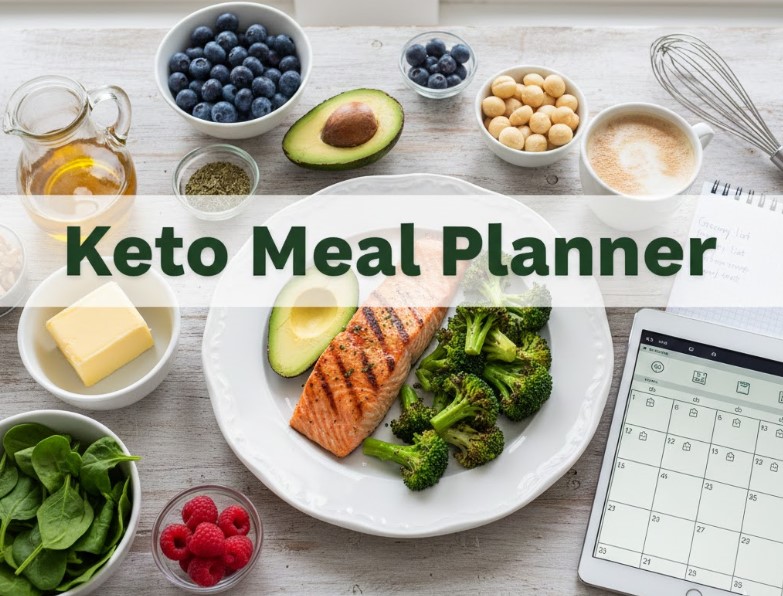
The essential secret to achieving sustainable results on a ketogenic diet is having a powerful and organized Keto meal planner. Many people jump into keto with enthusiasm but quickly get derailed by the daily challenge of figuring out what to eat while staying within their strict macros.
Without a solid Keto meal planner, you’re navigating a dietary minefield blindfolded, leading to frustration, “keto flu,” and ultimately, abandoning your goals.
This article will be your comprehensive guide to creating, implementing, and mastering a Keto meal planner that not only keeps you in ketosis but also makes your low-carb lifestyle enjoyable, varied, and effortless.
Why a Dedicated Keto Meal Planner is Your Non-Negotiable Tool
Creating a dedicated Keto meal planner is the single most effective action you can take to guarantee long-term adherence and success on the ketogenic diet. A common misconception is that meal planning is restrictive, but the opposite is true: it’s incredibly liberating.
By dedicating one hour each week to planning, you free up dozens of hours from daily decision-making, grocery trips, and stress. A great Keto meal planner acts as a buffer against common pitfalls like impulse snacking, dining out failures, and “carb creep.”
When you know exactly what you’re eating for the next seven days, you eliminate the mental energy spent on food choices, a concept known as “decision fatigue,” allowing you to focus on your well-being, work, or hobbies.
The Core Benefits of Using a Planner
Guaranteed Macro Compliance and Ketosis Maintenance
The backbone of successful keto is the strict mathematical precision required to stay in the fat-burning state of ketosis, which is primarily achieved by keeping net carbohydrate intake very low—typically under 20g to 50g per day, depending on the individual.
A meticulous Keto meal planner allows you to pre-calculate and verify the exact ratio of macronutrients (fats, proteins, and carbohydrates) for every meal, every day, before you even start cooking.
Without this foresight, it’s dangerously easy to unknowingly creep up on your carb limit, perhaps by adding a little too much onion to a dish, using a non-keto friendly sauce, or underestimating the carbs in nuts.
By planning your meals and logging the nutritional data beforehand, you eliminate guesswork, ensure your fat intake is high enough to fuel your body, and prevent protein overconsumption (which can lead to gluconeogenesis, where excess protein is converted into glucose), thereby guaranteeing you maintain the metabolic state of ketosis consistently.
This consistency is vital for experiencing the key benefits of keto, such as sustained energy and appetite suppression.
Superior Budgeting and Financial Efficiency
Adopting the ketogenic diet can, at first glance, appear expensive, given the emphasis on high-quality proteins and healthy fats like avocados, olive oil, and grass-fed meats. However, a strategically utilized Keto meal planner transforms this perceived cost into significant savings by promoting unparalleled financial efficiency.
When you plan a full week’s worth of meals, you can then generate a precise, itemized shopping list. This focused list prevents the notorious pitfall of impulse buying expensive, non-essential, or non-keto items.
Furthermore, a good planner enables you to leverage economies of scale by scheduling meals that utilize ingredients purchased in bulk, like a large roast cooked once and then repurposed for lunches and dinners throughout the week.
This minimizes food waste and ensures that every dollar spent is invested directly into supporting your dietary goals, turning your Keto meal planner into a powerful budgeting tool.
Maximizing Variety and Nutrient Density
One of the quickest ways to burnout on any restrictive diet is falling into a monotonous cycle of eating the same two or three meals daily, leading to boredom and potential nutrient deficiencies. A sophisticated Keto meal planner actively combats this dietary fatigue by forcing you to introduce variety.
By sitting down weekly to select recipes, you are prompted to ensure you are incorporating a wide spectrum of nutrient-dense, low-carb foods.
This means consciously scheduling in meals rich in essential fatty acids (like salmon or sardines for Omega-3s), ensuring a rainbow of low-carb vegetables (like dark leafy greens, cauliflower, and asparagus) for crucial fiber and micronutrients like potassium and magnesium, and rotating your protein sources.
This intentional variety not only makes the diet more enjoyable and sustainable but also ensures you are providing your body with a comprehensive nutritional profile, moving the focus of the diet from simple weight loss to holistic health and well-being.
Profound Reduction in Daily Stress and Decision Fatigue
For many people, the mental load associated with food (what to eat, when to eat it, and whether it aligns with their goals), is a constant source of stress.
This phenomenon is known as decision fatigue, where the sheer number of daily choices depletes mental energy, making willpower weaker later in the day when tempting, non-keto options are most appealing. A proactive Keto meal planner is the ultimate antidote to this fatigue.
By completing all the necessary planning, calculation, and grocery shopping on a designated prep day, you essentially put your entire week on autopilot.
When 6 PM rolls around on a Tuesday, there is no need to debate or stress; the answer to “what’s for dinner?” is already decided, prepped, or even pre-cooked and waiting.
This massive reduction in daily cognitive load frees up mental bandwidth, allowing you to dedicate your energy and focus to professional demands, family life, or personal pursuits, making the ketogenic lifestyle feel effortless and sustainable even during the busiest periods.
Building Your Personalized Keto Meal Planner: A Step-by-Step Guide
The best Keto meal planner is one that is tailored to your life. It must factor in your budget, your cooking skill level, your family’s needs, and your personal taste preferences.
Treating your planner creation as a structured project will ensure its long-term viability and success. This seven-step process transforms abstract goals into a concrete, executable plan that is easy to follow every single day.
Step 1: Accurately Calculate and Define Your Personal Macros
Before any planning can begin, the cornerstone of your entire keto strategy, must be precisely established. Utilize a reliable online macro calculator and provide accurate details regarding your current body metrics (weight, height, age, gender) and your actual daily activity level.
The calculator will provide specific targets for total calories, fat, protein, and most critically, net carbohydrates. It is very vital to set a caloric deficit (usually 10-20% below maintenance) if weight loss is the goal.
Without these precise numbers, your Keto meal planner is merely a collection of low-carb recipes; with them, it becomes a powerful, scientifically optimized tool for metabolic change. Knowing these targets allows you to curate recipes and portion sizes that mathematically guarantee you enter and stay in the fat-burning state of ketosis.
Step 2: Assemble Your Customized Keto-Friendly Recipe Arsenal
To prevent dietary fatigue and ensure long-term adherence, you need a diverse library of go-to meals that you genuinely look forward to eating. Gather a database of at least 15-20 simple recipes and meal ideas that meet your personal taste and cooking skill level.
Categorize these recipes functionally: identify 4-5 quick breakfast options (e.g., eggs, keto shakes), 5-6 easy lunch options that are often based on leftovers, and 7-10 varied dinner recipes (e.g., sheet pan meals, slow cooker dishes, grill recipes).
The goal here is to create a reliable rotation that minimizes decision-making but maximizes enjoyment.
When compiling this arsenal for your Keto meal planner, prioritize whole, unprocessed foods like quality meats, fatty fish, low-carb vegetables, eggs, and healthy fats, ensuring that every option is 5g net carbs or less per serving to provide ample buffer space for the day.
Step 3: Implement The Weekly Meal Rotation Template
With your macro targets set and your recipe arsenal ready, the next step is to structure your week using a template. Use a simple spreadsheet, a digital app, or a printed calendar to map out your seven days.
Start by placing your least demanding or easiest recipes on your busiest workdays, reserving more involved recipes for the weekend when you have more time to cook.
Make use of a “leftover strategy”: intentionally schedule a dinner that yields large portions (like chili, roast chicken, or a casserole) and immediately schedule those leftovers as the lunch for the following day.
This practice dramatically cuts down on daily cooking time and ensures consistency. This rotation template transforms your static recipe list into a dynamic, manageable Keto meal planner that adapts to the rhythm of your week, providing clarity on what needs to be cooked and when.
Step 4: Develop and Finalize the Consolidated Grocery List
Once your meals are scheduled for the week, the most practical step is to immediately generate a single, comprehensive shopping list. Review every recipe in your Keto meal planner and list every required ingredient.
Then, carefully cross-reference this list with what you already have in your pantry, freezer, and refrigerator to avoid unnecessary purchases. Organize the final shopping list by store section to ensure a swift, focused, and efficient trip to the store.
This list is the financial control center of your plan; it ensures you only buy necessary items, eliminates impulse purchases, and prevents you from realizing halfway through a recipe that you are missing a critical keto staple like heavy cream or olive oil.
A well-organized list stemming from your Keto meal planner is the key to both budget compliance and cooking success.
Step 5: Execute Batch Cooking and Strategic Prep
The transition from a planning mindset to an execution mindset happens during the dedicated batch cooking session, which is typically scheduled for a weekend day (like Sunday). This dedicated time is the true engine of your Keto meal planner’s effectiveness.
During this session, focus on preparing foundational components that will be used throughout the week. This includes roasting a large protein source (like chicken or beef), washing and chopping all low-carb vegetables (broccoli, cauliflower, spinach), making portioned snacks like cheese and nut packs, and mixing up homemade dressings or dips.
By pre-chopping, pre-cooking, and pre-portioning, you reduce weekday cooking time from forty minutes to ten minutes. This preparation ensures that when time is tight during the week, sticking to your Keto meal planner is the path of least resistance, preventing you from reaching for non-compliant convenience foods.
Step 6: Daily Tracking, Adjusting, and Optimization
A truly effective Keto meal planner is not a static document; it is a living blueprint that requires daily review and occasional optimization. Use a tracking app (or your planner document) to log the food you actually consume and compare it against your planned macros from Step 1.
This daily check-in is vital for identifying hidden carbs or accidental protein overages. If you have a busy, low-activity day, you might slightly reduce your fat intake; if you engage in a planned heavy workout, you might strategically increase your protein.
Furthermore, always track your non-food elements like water intake and key electrolytes (sodium, potassium, magnesium).
By consistently tracking and making minor, informed adjustments, you use your Keto meal planner not just for adherence, but for continuous metabolic improvement and fine-tuning.
Step 7: Weekly Review and Iterative Improvement
At the end of each week, before planning the next, conduct a brief but essential review. This iterative process is what separates successful, long-term keto practitioners from those who eventually quit. Ask yourself three critical questions:
- Which meals from the Keto meal planner did I genuinely enjoy and feel satisfied by? (Keep those.)
- Which meals or days felt overly complicated, rushed, or led to a macro overshoot? (Revise or eliminate those recipes.)
- Did I waste any food, and how can I adjust my shopping or prep next week to prevent it?
Use the answers to refine your recipe arsenal and template for the following week. This commitment to continuous improvement ensures that your Keto meal planner becomes increasingly personalized, efficient, and enjoyable, making the keto lifestyle truly sustainable for years to come.
Advanced Strategies to Optimize Your Keto Meal Planner
Once you have mastered the foundational steps of building your plan, it’s time to move beyond basic compliance.
These advanced strategies transform your standard Keto meal planner into a sophisticated tool for managing energy, enhancing performance, and ensuring a diverse nutrient intake that supports long-term health and keeps boredom at bay.
Strategically Cycling Healthy Fats and Essential Fatty Acids
While all ketogenic diets are high-fat, simply eating butter and cheese every day misses the mark on nutrient density and long-term cardiovascular health.
An advanced Keto meal planner mandates the strategic cycling of various healthy fat sources to ensure a balanced intake of monounsaturated, polyunsaturated (especially Omega-3s), and saturated fats.
Use your weekly template to consciously schedule meals rich in Omega-3 fatty acids, such as salmon, mackerel, or sardines, at least twice a week. These fats are crucial for reducing inflammation and supporting brain health.
Contrastingly, integrate days focusing on monounsaturated fats from high-quality extra virgin olive oil and avocados, and use saturated fats from sources like coconut oil or high-quality grass-fed butter primarily for cooking or in your keto coffee.
This conscious rotation prevents reliance on a single fat source, guaranteeing a broader spectrum of essential fatty acids that optimize cellular function and metabolic flexibility, making your Keto meal planner a tool for vibrant health, not just weight management.
Integrating Intermittent Fasting (IF) for Simplified Planning
Intermittent Fasting (IF) is the practice of strategically limiting your eating to a defined window of time, and it pairs synergistically with the ketogenic diet, often simplifying the use of your Keto meal planner.
When adopting a common IF schedule like the 16/8 protocol (16 hours fasting, 8 hours eating), you dramatically reduce the number of meals you need to plan for each day, typically consolidating your calorie and macro intake into just two main meals.
This instantly removes the complexity of planning a third meal, making it easier to hit your macro targets with precision and consistency.
For example, your planner only needs to account for a substantial noon “Break-Fast” and an early evening “Dinner.” This streamlined approach minimizes cooking, shopping, and tracking, significantly reduces the cognitive load associated with food decisions, and helps maintain a caloric deficit without feeling restrictive, proving that a simplified Keto meal planner is often a more effective one.
Proactive Electrolyte Tracking to Combat Keto Flu
The infamous “keto flu” is not caused by carb withdrawal, but rather by the rapid depletion of critical minerals, primarily sodium, potassium, and magnesium, due to the diuretic effect of reducing carbohydrates.
A truly advanced Keto meal planner moves beyond mere food and macro tracking; it becomes an electrolyte management system. You must proactively schedule foods that are naturally rich in these minerals to prevent deficiencies. T
his means consciously planning to include generous servings of potassium-rich low-carb vegetables (like spinach, avocado, and Brussels sprouts), ensuring adequate sodium intake by liberally salting your food and broths, and integrating magnesium sources (like nuts, seeds, and dark chocolate) into your snack rotation.
By treating electrolyte balance as a mandatory part of your planning, you not only stave off the uncomfortable side effects of the transition but also support crucial bodily functions, including nerve and muscle activity, maximizing the physical benefits of the ketogenic diet.
Strategic Carb-Up Planning for Targeted Performance (TKD/CKD)
For athletes or individuals engaged in high-intensity, demanding exercise, a standard ketogenic diet (SKD) may occasionally hinder peak performance. Advanced users can optimize their Keto meal planner by incorporating elements of the Targeted Ketogenic Diet (TKD) or the Cyclical Ketogenic Diet (CKD).
TKD involves consuming a small, strategic bolus of fast-acting carbohydrates (typically 20-50g) immediately before or after an intense workout session to maximize performance and recovery without interrupting ketosis for long periods.
CKD involves planned, higher-carb refeeds (e.g., one day per week) designed to refill muscle glycogen stores. Incorporating either of these requires highly precise planning in your Keto meal planner, ensuring the carb-up meals are clean and only happen at the right time.
This strategy elevates the planner from a simple weight-loss tool to a sophisticated performance and body composition management system.
Dynamic Planning for Social Events and Eating Out
The true test of a sustainable diet is how well it integrates with a social life, and an optimized Keto meal planner must include a strategy for dining out or attending events.
This involves a dynamic planning approach. When you know a restaurant meal is scheduled, use your planner to “budget” your net carbs earlier in the week or day. Look at the restaurant’s menu online beforehand and pre-select a guaranteed keto-friendly option.
This is usually a large steak, seafood, or chicken dish, always asking for sauces and dressings on the side and substituting starchy sides for double vegetables.
If the menu is unavailable, adopt the “Steak and Hold the Fries” mentality. By making these decisions in advance and recording the estimated meal in your Keto meal planner, you remove the need for stressful, last-minute decisions influenced by hunger or peer pressure, ensuring social flexibility does not become a point of failure for your strict macro adherence.
A Sample 3-Day Keto Meal Planner
To illustrate how these principles translate into daily practice, here is a detailed, sample 3-day Keto meal planner designed for optimal fat intake, nutrient variety, and macro consistency, demonstrating how easy it is to track and plan without complex grids.
Day 1: Starting Strong with High Fat and Greens
Breakfast Focus:
Start the week with a classic keto breakfast designed for maximum satiety. Plan for three scrambled eggs cooked generously in butter or coconut oil. Whip them until fluffy and top with 1oz of shredded sharp cheddar cheese for added fat and flavor. Serve this alongside half of a medium-sized, sliced avocado, seasoned simply with salt and pepper.
Lunch Focus:
Utilize the convenience of leftovers or a simple assembly meal. For lunch, plan a hearty Chicken Caesar Salad. Use sliced, grilled chicken breast (pre-cooked during your Sunday prep) served over a generous bed of romaine lettuce.
Instead of croutons, use baked cheese crisps. Use a full-fat Caesar dressing, but check the label to ensure it contains no added sugars or high-fructose corn syrup. This meal provides excellent protein and essential fats.
Dinner Focus:
Prioritize healthy fats and Omega-3s. Schedule a delicious baked salmon fillet, seasoned simply with dill, lemon, and olive oil. Pair this with a substantial serving of spinach sautéed in garlic and butter.
This dinner is simple, quick, and packed with high-quality fats and critical electrolytes (magnesium and potassium) from the leafy greens, fitting perfectly into your disciplined Keto meal planner.
Day 2: Leveraging Batch Prep and Convenience
Breakfast Focus:
On a busy day, rely on simplified fuel. Your plan calls for a Keto Coffee. Blend one cup of hot brewed coffee with one tablespoon of unsalted butter and one tablespoon of MCT oil or coconut oil.
This provides a massive fat boost to maintain energy and satiety until lunch, effectively supporting an Intermittent Fasting (IF) schedule and keeping your morning carb count near zero.
Lunch Focus:
This is where the power of batch cooking shines. Your lunch is simply a portion of the leftover Baked Salmon and Sautéed Spinach from Monday’s dinner. By packing this into a container the night before, you ensure a quick, compliant, and balanced meal that requires zero cooking or decision-making during the workday.
Dinner Focus:
Plan for a protein that is naturally higher in fat. Schedule a serving of Pork Chops. Pan-sear these in a high-heat fat like lard or avocado oil. Pair the chops with a generous side of mashed cauliflower.
The “mashed” part comes from blending the cooked cauliflower with heavy cream, cream cheese, and butter to give it the rich, comforting texture of traditional mashed potatoes while keeping the net carbs extremely low. This meal proves your Keto meal planner can be satisfying and indulgent.
Day 3: Introducing Variety and Hearty Comfort
Breakfast Focus:
Introduce a slightly higher-carb but compliant option to vary textures. Your plan includes low-carb Greek yogurt (ensure the label shows less than 5g net carbs per serving) mixed with a handful of raspberries, one of the lowest-carb berries available. Add a small sprinkle of chopped walnuts for crunch and healthy fats. This offers a welcome break from eggs and coffee.
Lunch Focus:
Schedule a hearty, easy-to-assemble meal. Plan a “Taco Bowl” without the shells or rice. Use seasoned ground beef (pre-cooked is best) and top it with full-fat sour cream, shredded cheese, and a small amount of diced onion and bell pepper for flavor (mindful of the carb count here). This lunch is high in fat and protein, requires minimal assembly, and feels like a satisfying treat.
Dinner Focus:
End the sample cycle with a fun, comfort-food replacement. Schedule a Keto-Friendly Meatza. This uses a large, flat disc of seasoned, baked ground beef as the “crust.”
Top it with a sugar-free tomato sauce, plenty of mozzarella cheese, and keto-compliant toppings like pepperoni, mushrooms, and olives. This dinner shows that your Keto meal planner doesn’t mean sacrificing popular flavors, just adapting the method to stay compliant.
Conclusion
Your Keto meal planner is not a rigid prison sentence; it is a flexible roadmap to health. Start simply, focusing on whole, unprocessed foods. As you gain confidence, introduce new recipes and techniques like fat bombs or keto baking.
By making the Keto meal planner a cornerstone of your low-carb strategy, you move from just trying the keto diet to successfully living the ketogenic lifestyle.
It is the key tool that provides control, consistency, and the clarity needed to enjoy the immense benefits of being fat-adapted. Take the time this week to build your plan, and watch your success skyrocket.